
About Floating World Art
Reimagining Beauty, Transcending Time
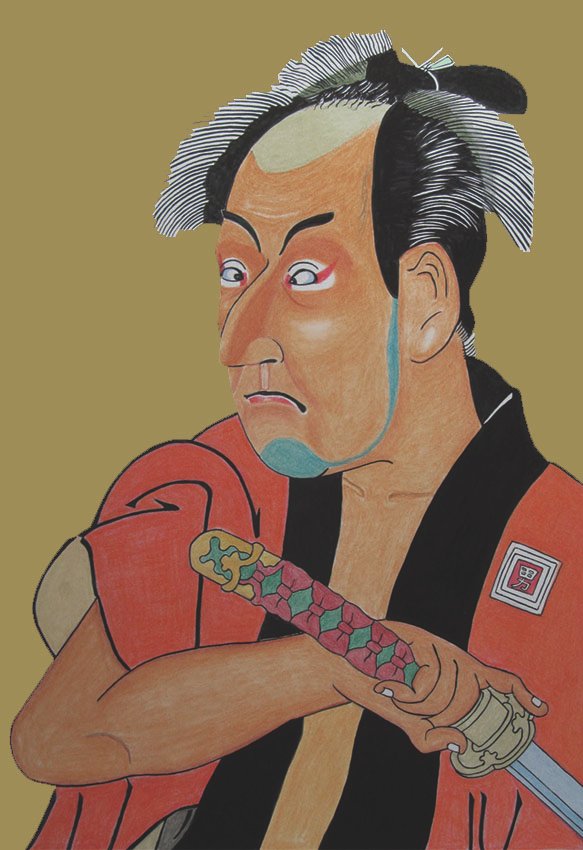
Floating World Art began with my father’s fascination for ukiyo‑e and his reinterpretations of Sharaku’s kabuki actor portraits. Through digital artistry, he restores and reimagines works that were often overlooked, giving them new life for audiences today. This page shares his journey — and invites you to explore who Sharaku was, and why his art matters today.
Our Story — How It Began
Early Fascination
From childhood, my father loved samurai dramas and Japanese history. He would often watch period TV shows or read history books, nurturing a lifelong fascination with traditional culture.
Discovering Sharaku
While artists like Hokusai and Hiroshige are world‑famous, my father was captivated by the enigmatic Tōshūsai Sharaku, who flourished briefly in Edo Japan. Sharaku’s kabuki portraits expressed the spirit of iki (refined stylishness), and many featured actors my father admired.
Digital Re‑imagining
Unlike landscape prints, Sharaku’s ōkubi‑e (large head portraits) offered little shading and lost detail over time. With Illustrator and Photoshop, my father discovered that digital layering mirrored woodblock layering, and he could restore tone, color, and expression. His works became modern reinterpretations — bridging Edo tradition with contemporary design.
Evolving Ideas
As his experiments grew, he envisioned new applications — card games, coloring books, and creative formats inspired by Edo’s three kabuki theaters (za). He imagined these structures sparking fresh designs for the modern age.
The works presented here are his reinterpretations — honoring Sharaku while introducing him to the global recognition given to masters such as Hokusai and Hiroshige.
Who Was Sharaku?
Tōshūsai Sharaku was an ukiyo‑e artist active only in 1794–1795, producing nearly 150 kabuki actor portraits in less than a year.
Unlike his peers, Sharaku was unafraid to highlight exaggerated expressions and emotional depth, breaking away from the idealized beauty seen in much Edo art. His prints were so raw and psychological that many collectors of the time rejected them. After only ten months, Sharaku disappeared, and his true identity remains a mystery.
Today, Sharaku is regarded as one of the most innovative and daring artists of the Edo period — a genius whose vision was ahead of his time.
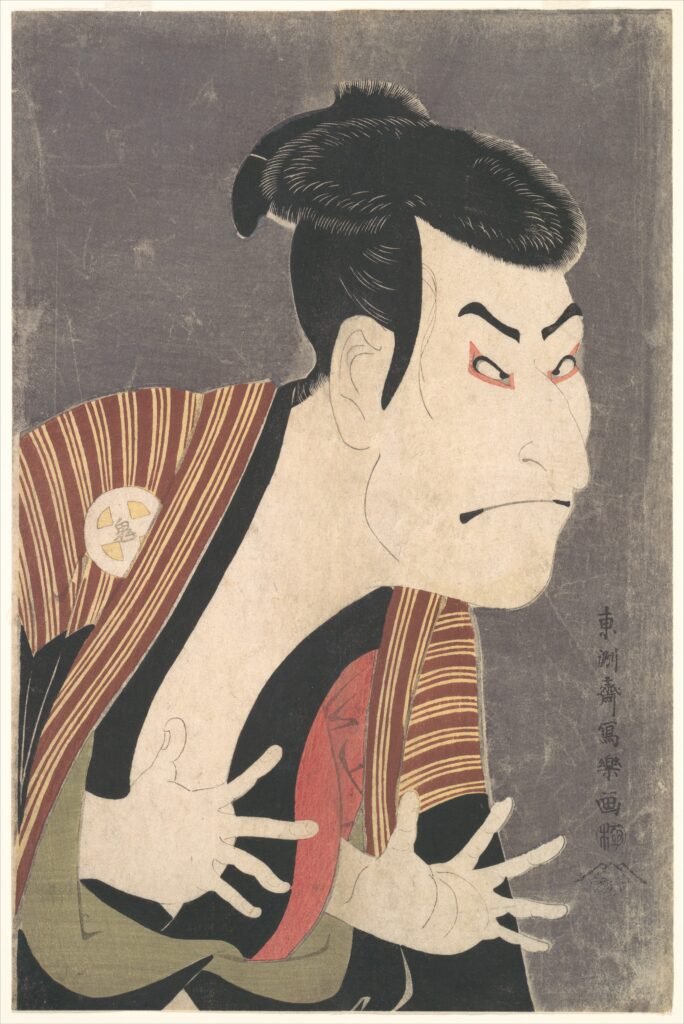
(Public domain – original Edo period woodblock print.)
Mission & Vision
Mission
To honor my father’s artistic journey by sharing his reinterpretations of Sharaku’s portraits with a global audience — illuminating a lesser‑known corner of ukiyo‑e art while sparking curiosity about Japan’s cultural history.
Vision
To keep Sharaku’s spirit alive, not just as a historical figure but as an ongoing creative dialogue — where Edo kabuki meets today’s imagination. Through these works, Floating World Art seeks to connect Japan’s past with a worldwide future of discovery and inspiration.
Highlights from the Works
Exploring the dialogue between Edo and today
The two works below show the same figure, originally depicted by Toshusai Sharaku in 1794 and reinterpreted by my father more than two centuries later. Juxtaposing the Edo master’s woodblock print and its modern digital reconstruction highlights how expression, technique, and emotion transcend time.
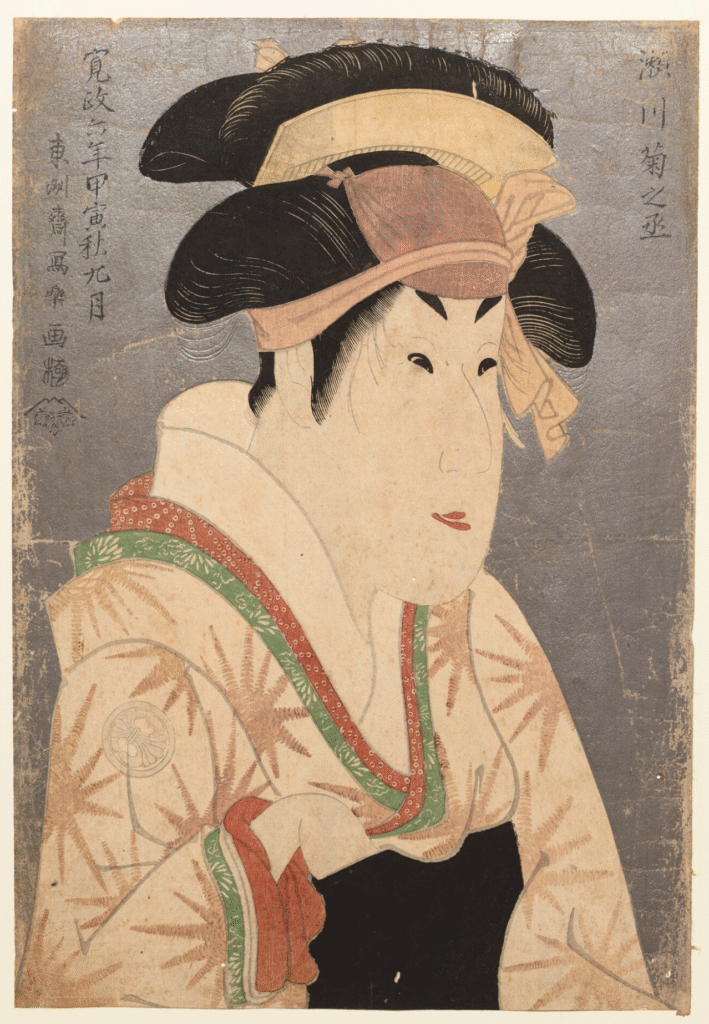
Toshusai Sharaku — Segawa Kikunojō III as Oshizu, wife of Tanabe Bunzō (1794)
(Public domain – original Edo period woodblock print.)
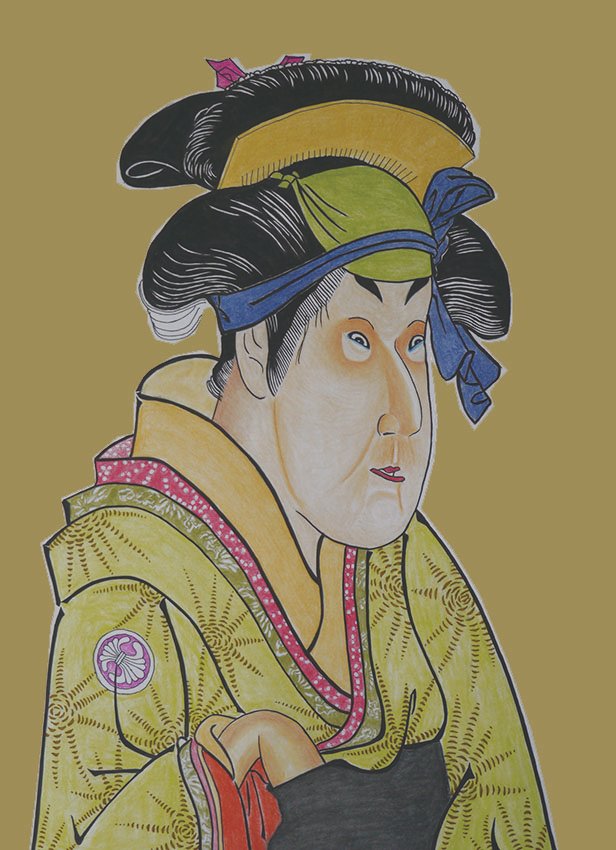
Reinterpreted by my Father, 2025 — Digital Layer Edition.
Modern re‑imagination of Sharaku’s composition through contemporary color and light.
Looking Ahead
Floating World Art is more than preservation — it’s evolution. My father has imagined Sharaku’s motifs as card games, coloring books, and other design inspirations. Edo kabuki’s competitive theater world (za) offers a creative framework for playful re‑interpretation today.
Closing & Next Step
Sharaku’s world, once fleeting, is here reimagined for the present. Through my father’s works, I hope people everywhere discover the beauty of kabuki, ukiyo‑e, and Japanese creativity.